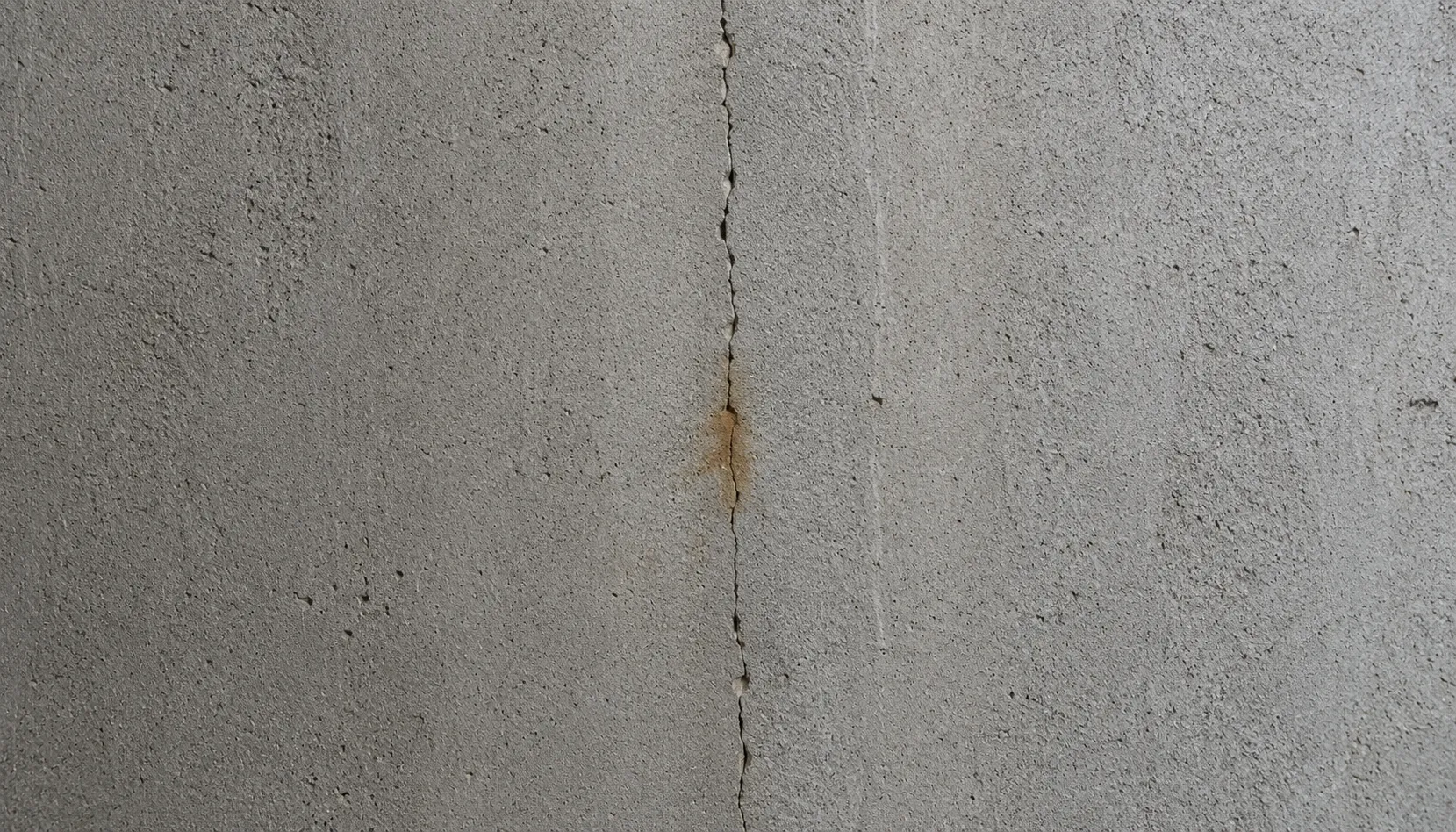
Almost every poured concrete foundation in Newmarket has at least one crack. Most are harmless. A small number are real structural concerns. Knowing the difference saves you from either (a) panicking unnecessarily or (b) ignoring something that matters.
The crack types that show up in Newmarket
Vertical cracks (most common, usually fine)
Run roughly straight up and down the foundation wall. Width usually under 1/8 inch. Caused by normal concrete shrinkage as the foundation cured. Almost always non-structural. Polyurethane injection $400-$900 fixes them permanently.
Diagonal cracks (usually fine, sometimes worth a closer look)
Run at an angle, often from a corner of a window or door opening. Result of either normal settlement or differential settlement. The diagonal direction itself isn't a structural concern - it's the location and width that matter. Cracks wider than 1/4 inch or that run more than half the wall height deserve a closer look.
Horizontal cracks (the serious one)
A crack that runs horizontally across a foundation wall is often a sign that soil pressure is pushing the wall inward. This is structural. Don't inject and ignore. Get a proper assessment - the wall may need exterior excavation, carbon fibre reinforcement, or wall pinning.
Stair-step cracks (block foundations only)
In concrete block foundations (concrete masonry units), cracks follow mortar joints in a stair-step pattern. They can indicate movement and are sometimes structural depending on the size and pattern.
Hairline map cracking (cosmetic)
Tiny irregular cracks across larger areas of concrete. Surface-level, doesn't penetrate the wall. Usually cosmetic. Worth monitoring but rarely needs intervention.
What's typical for Newmarket housing eras
Pre-1970s homes (Old Newmarket, near Davis Drive)
Many have stone or block foundations. Cracks here often follow mortar joints and require parging and waterproofing rather than injection. Stone foundation work is more specialized than poured concrete and prices accordingly.
1970s-1990s subdivisions (Glenway, Stonehaven, Bristol-London)
Mostly poured concrete. Vertical and diagonal cracks are common at this point in their lives. Most are easy injection jobs. Original tar membranes from this era have started failing in the last 10 years - so even cracks that didn't leak in 1995 may be leaking now.
2000+ builds (Copper Hills, Summerhill, Woodland Hills)
Better-built foundations on average, but still develop normal shrinkage cracks 5-15 years in. Modern poured concrete with good membranes - injection is almost always the right fix for any leaks. Settlement cracks at corners are common as the home finishes its initial settlement period.
When to call us
- Any new crack you can fit a credit card into
- Any crack that's actively leaking water
- Any horizontal crack at all (call sooner rather than later)
- Cracks that have grown noticeably over the past year
- Multiple cracks in the same wall
- Cracks accompanied by other signs (sticking doors, drywall cracks above on main floor, sloping floors)
When you can probably wait
- Hairline cracks (less than 1/16 inch) that aren't leaking
- Old cracks that haven't changed in years
- Cosmetic surface map cracking
- A single small vertical crack in a 30+ year old home that has never leaked
Free inspection
Send us a photo or schedule a free in-person look. We'll tell you whether your crack needs work, and if so, what it should cost.
Got a basement waterproofing question?
Free inspection across Newmarket and York Region. Honest answers, no sales pressure.
Call (289) 212-5404