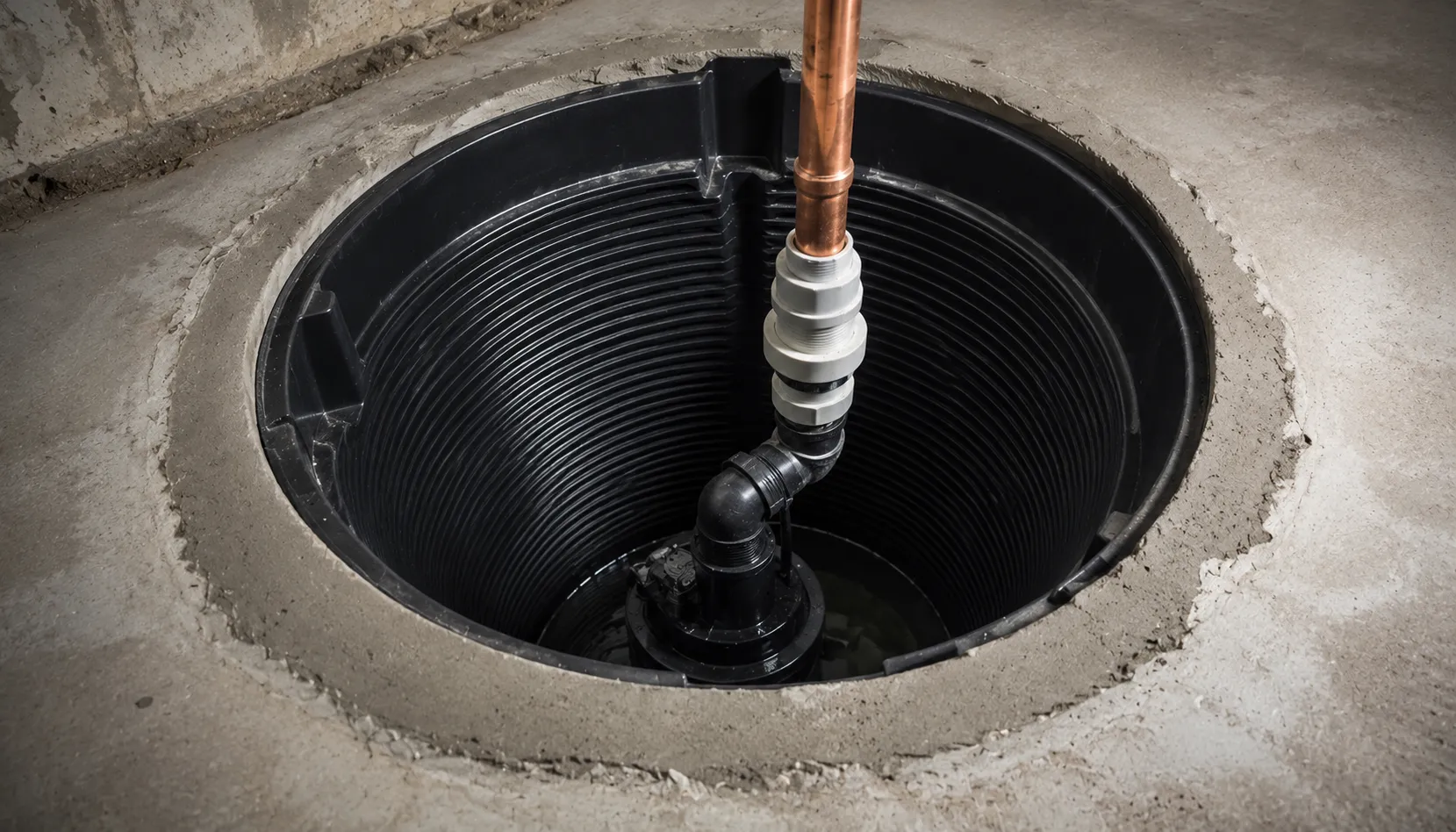
What a sump pump does and why it matters
A sump pump sits in a pit dug into the lowest point of your basement floor. Groundwater that collects around your foundation drains via weeping tile into that pit. When the water level in the pit hits a trigger height, the pump turns on and ejects the water through a discharge pipe to outside the house. As long as the pump is healthy and has power, your basement stays dry.
When the pump fails, water keeps coming. Within a few hours of a heavy storm, you can have several inches of water on the basement floor. By the time you notice, drywall and carpet are gone.
Signs your sump pump needs replacement
- Age: Over 7 years old. Pumps have a finite mechanical lifespan.
- Constantly running: Pump cycles repeatedly even when it's not raining.
- Strange noises: Grinding, rattling, or screeching from the pit.
- Visible rust or corrosion: On the pump body or discharge pipe.
- Doesn't kick on: Float switch stuck or motor dead. Test by pouring water into the pit.
- Visible water around the pit: Pump can't keep up or has failed entirely.
- You can't remember the last time it was serviced: Self-explanatory.
What we install
Primary submersible pump
Most homes get a 1/3 HP or 1/2 HP cast-iron submersible pump. Cast iron lasts longer than plastic and dissipates heat better, which extends motor life. We use Liberty, Zoeller, Wayne, or similar reliable brands. Plastic pumps from the box store are cheaper but rarely make it past 5 years.
Battery backup pump
Sits beside or above the primary pump. Runs off a deep-cycle marine battery that's continuously trickle-charged. When the primary pump fails or loses power, the backup automatically takes over and can run for 6-8 hours on a full battery. Critical for any finished basement.
Sump pit and lid
If your existing pit is too small (less than 18-inch diameter), undersized for your water volume, or just old and cracked, we replace the whole pit. Modern airtight lids reduce humidity, basement smell, and radon exposure.
High-water alarm
Wi-Fi-connected alarm that sends a phone notification if water rises above the trigger level. Catches pump failures before you walk into a flooded basement.
Discharge upgrade
Many older homes discharge sump water too close to the foundation, which just feeds it back into the system. We extend discharge lines well away from the house and slope them properly.
Newmarket-specific notes
Newmarket and most of York Region has clay-heavy soil that holds groundwater longer than sandy soil. Pumps in this region often run more than they would elsewhere, which means they wear out faster than the manufacturer's stated lifespan. If your pump is 6-7 years old in Newmarket, plan to replace it before year 8.
Town of Newmarket bylaws prohibit discharging sump water into the sanitary sewer. We always discharge to grade or to a storm drain in compliance with local rules. Some homes built before this bylaw existed still have illegal sanitary connections - we identify and fix these during install.