What weeping tile actually does
Imagine the foundation of your house is a concrete box buried in soil. Even with a good waterproofing membrane on the outside, water still collects in the soil right next to the box - especially after heavy rain or during spring thaw. Without anywhere to go, that water builds up and pushes against the foundation (this is called hydrostatic pressure). Eventually it finds the smallest weakness and gets through.
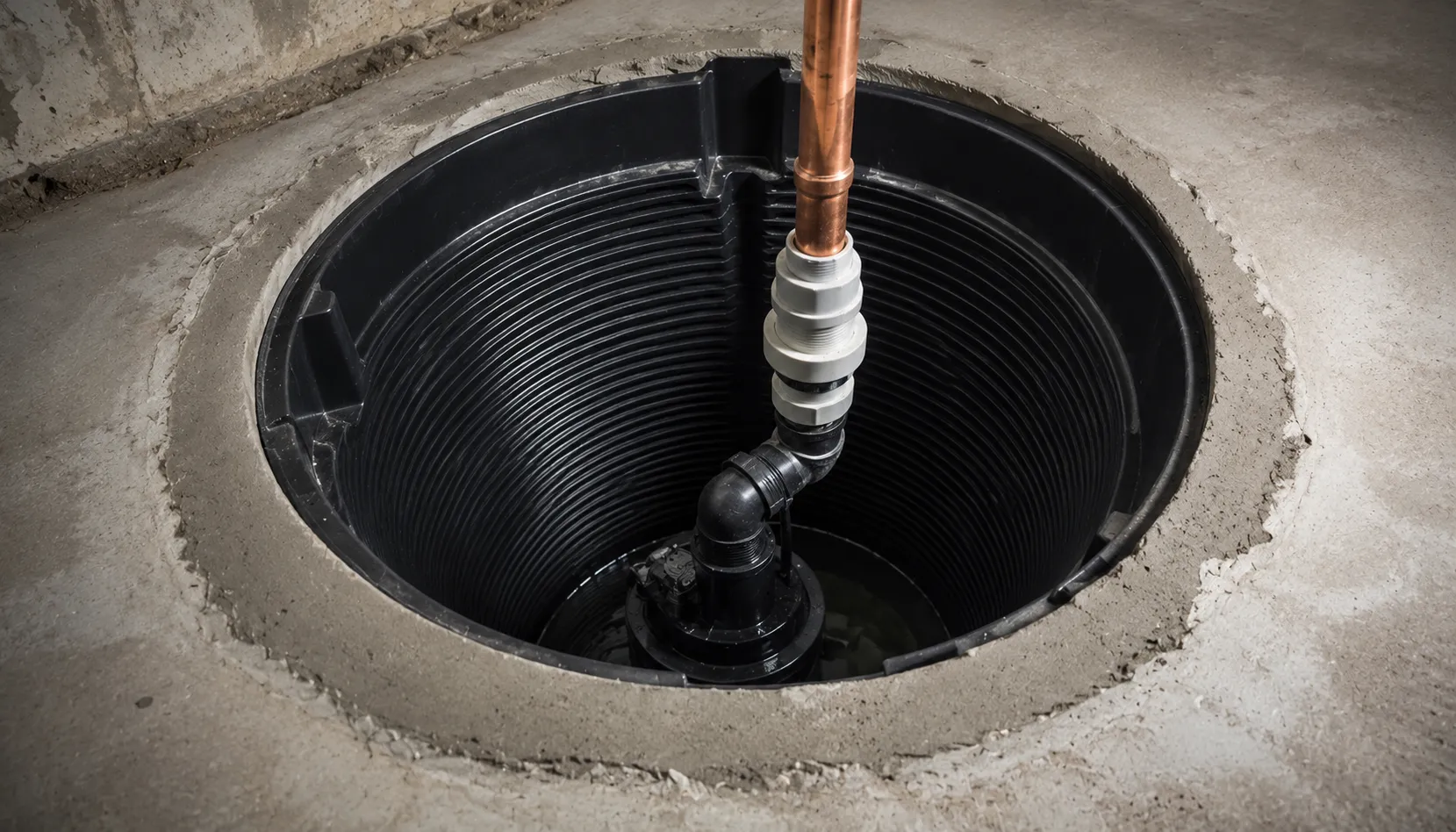
Weeping tile is the drainage system that gives all that water somewhere to go before it reaches a basement-leak failure point. It is a perforated pipe laid around the perimeter of your foundation, sloped so collected water flows toward a sump pit or to daylight. As long as the weeping tile is open and functioning, water drains away faster than it can build up against the wall.
Why old weeping tile fails
- Clay tile (pre-1970s): Original "weeping tile" was actual clay segments. They shift, crack, and crush over decades. Tree roots love the moist environment and grow through joints.
- Soil settling: Even modern PVC weeping tile can shift if the surrounding soil settles unevenly, breaking the slope and creating low spots that hold water.
- Sediment buildup: Soil washes into the pipe through perforations and gradually clogs it.
- Root intrusion: Trees and shrubs grow roots into the pipe through perforations or joints.
- Crushed sections: Heavy equipment, construction work, or even years of soil pressure can deform or crush sections.
Interior weeping tile installation
This is the more common modern approach because it is faster, cheaper, and doesn't require digging up landscaping.
We jackhammer a 12-inch trench along the inside perimeter of the basement floor, install new perforated PVC weeping tile in clean gravel, slope it to a sump pit, and re-pour concrete. New pump goes in the pit. Discharge pipe routes water outside well away from the foundation.
The new interior weeping tile catches water that gets through the foundation wall, so even if the old exterior tile is still partially functional, the interior system handles whatever gets past it. Total install: 2-4 days.
Exterior weeping tile replacement
The right call when:
- Hydrostatic pressure is severe and you want to relieve it before it reaches the wall
- You're already excavating for exterior membrane work
- The original exterior tile is so badly failed that it is now causing structural issues
- Soil conditions or grading mean interior systems would run constantly
We excavate down to the footing, remove the failed clay tile, install new 4-inch PVC perforated pipe wrapped in filter fabric, slope to discharge, and backfill with clean granular material. Often combined with foundation membrane application as a single project.
How we diagnose weeping tile problems
Camera inspection. We snake a small inspection camera through the existing weeping tile via a sump pit, cleanout, or excavated entry point. The camera footage shows exactly what's wrong: collapse, root intrusion, sediment, low spots, or full clogs. We share the video with you so you can see the same evidence we're basing our recommendation on.