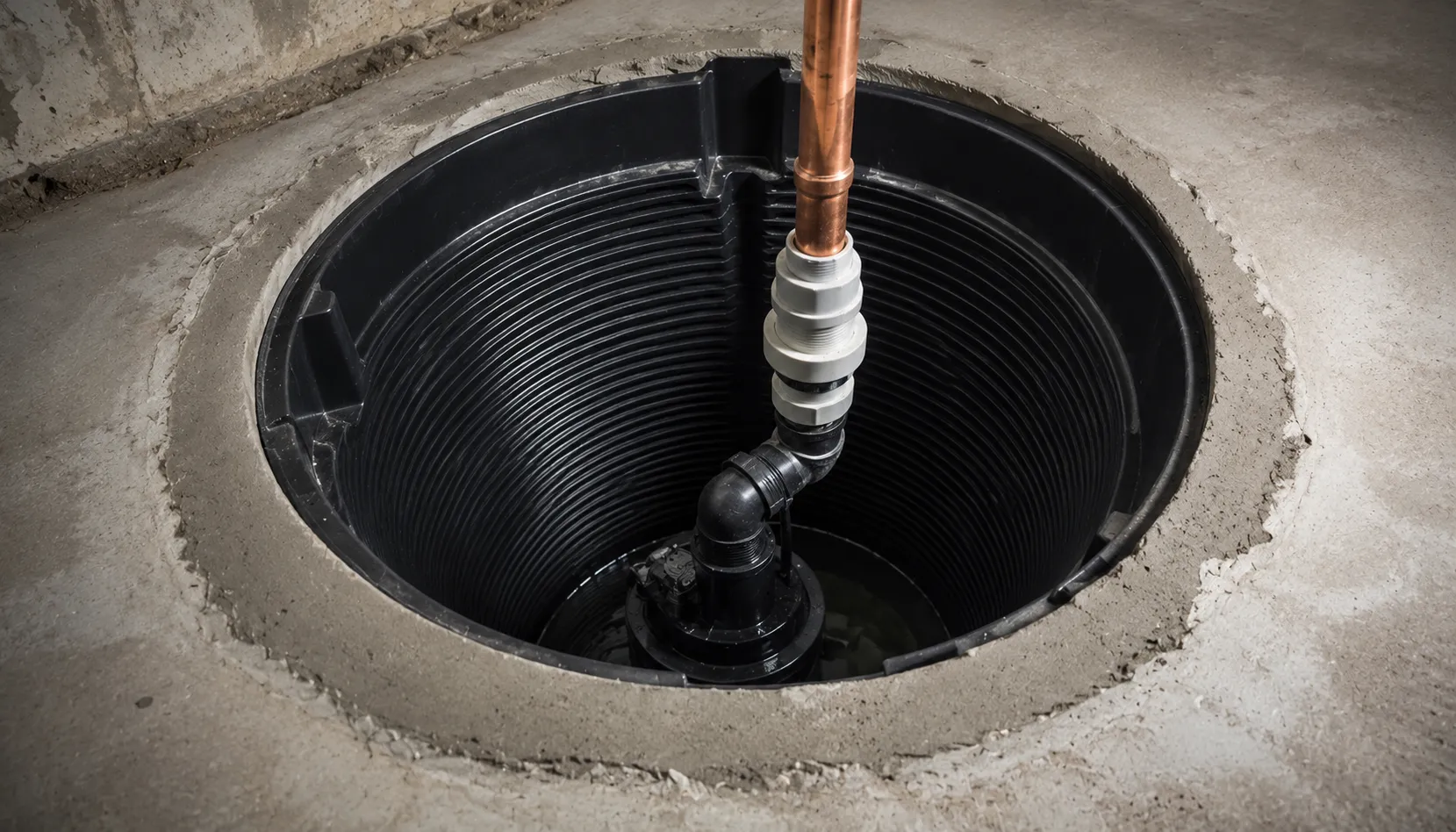
Why window wells leak (and why it's almost always the drain)
The window well around your basement window has one job: keep dirt away from the window so light and air can reach the basement. To do that job without flooding, the well needs a working drain at the bottom that connects to your weeping tile. Most original installations included that drain. Most haven't been touched in 30-50 years.
What happens over time: leaves, soil, and sediment fall into the well and gradually clog the drain. When heavy rain comes, water has nowhere to go but up the well, against the window frame, and eventually through the seal into the basement. The window itself is not the problem. The well drainage is.
What we install
New window well
For homes that never had a proper well, or where the existing well has rusted through. We excavate around the window, install a galvanized steel or polymer well rated for soil pressure, set it on a proper gravel base with a drain to weeping tile, and seal the connection to the foundation wall.
Drainage repair on existing well
For homes where the well is fine but the drain is clogged or missing. We dig out the well to the existing weeping tile, clean or install a proper drain pipe, and refill with clean gravel. The well stays. Job is faster and cheaper than full replacement.
Window well covers
Polycarbonate covers that fit your specific well dimensions. They keep leaves, snow, and rain out while letting light through. Easy-release for emergency egress. Important if you have small kids who could fall in or pets who could get stuck.
Egress-compliant wells for finished basements
Ontario Building Code requires that any bedroom in a finished basement have an egress window with a window well sized for emergency exit (specific dimensions for opening size and well clear space). If you're finishing a basement, we install code-compliant egress wells that pass inspection.
Diagnosing window well leaks
We start by inspecting the well during dry conditions: depth, drainage state, gravel base, and connection to weeping tile. Then we run a hose test - flooding the well with a hose and watching where the water goes. If water drains within a few minutes, the drain is functional. If it pools and stays, the drain is clogged or missing. If water overflows the well lip, the well is too shallow or the surrounding grade is wrong.
Most leaks we trace to wells turn out to be drain issues, not foundation issues. The cost difference between a $500 drain repair and a $7,000 interior waterproofing system is meaningful. Diagnosing correctly matters.